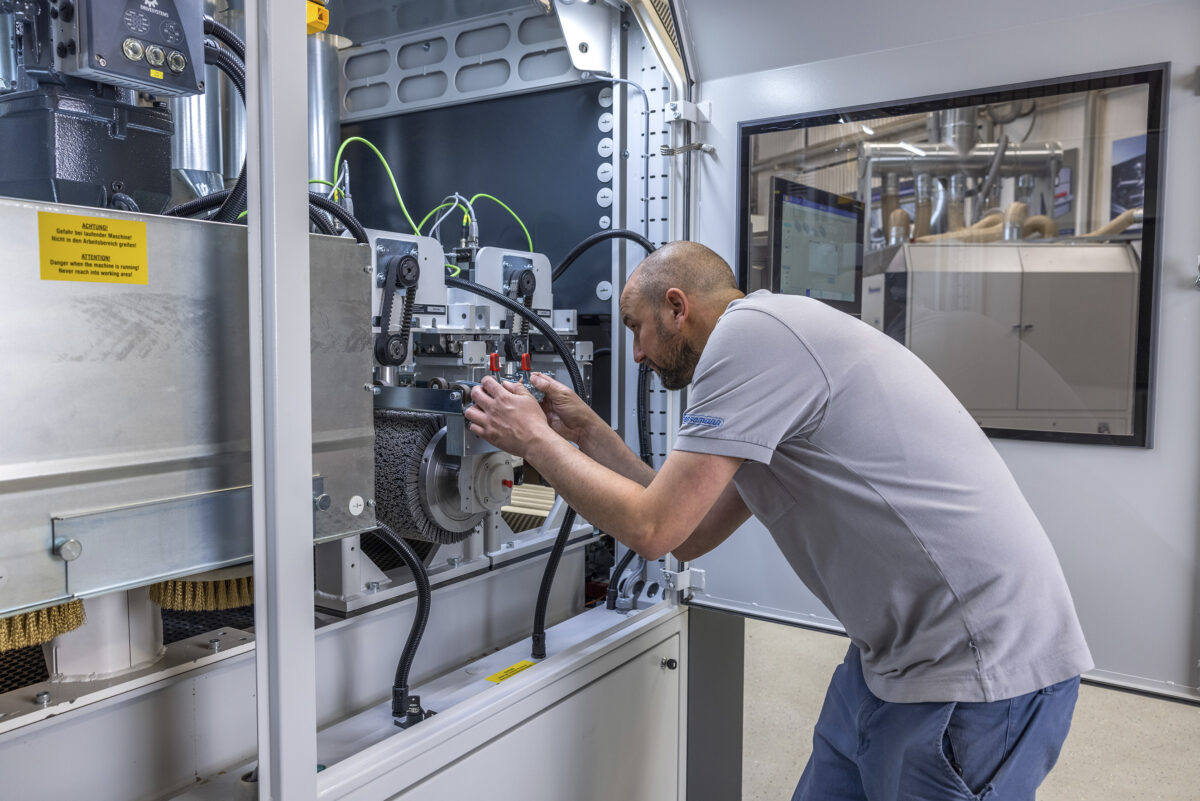
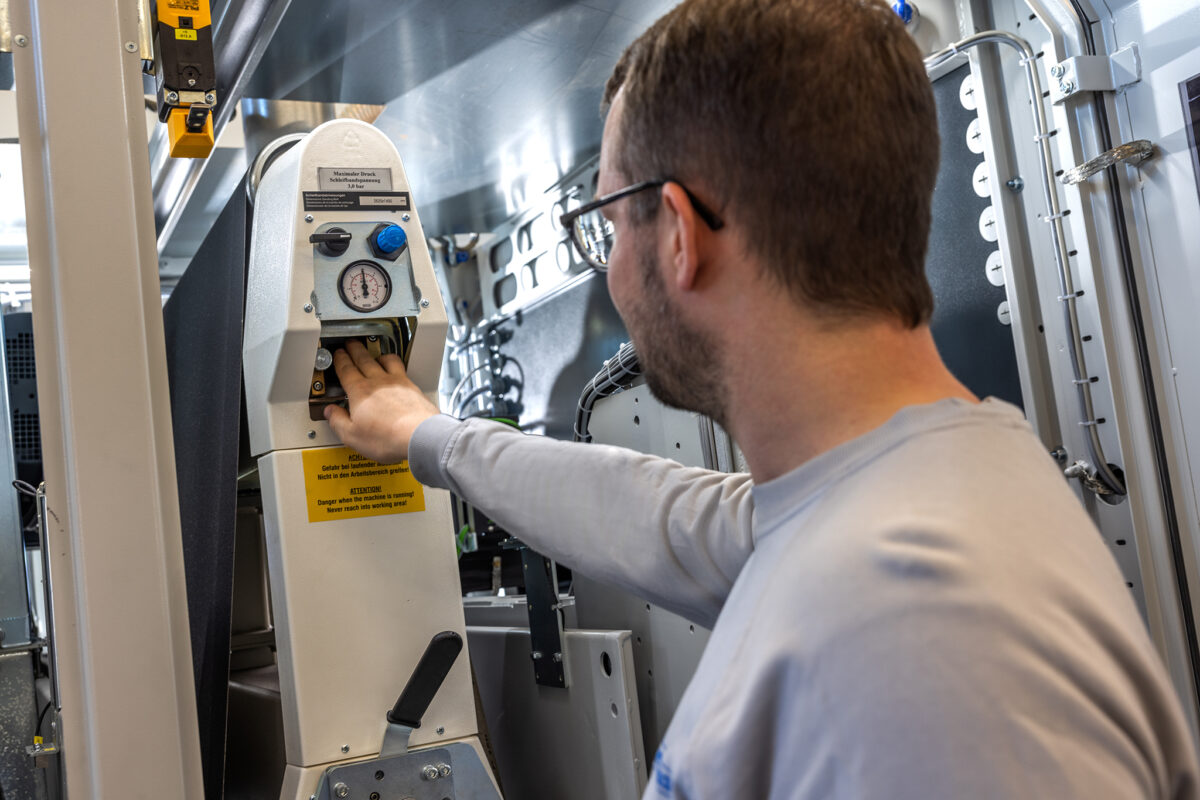
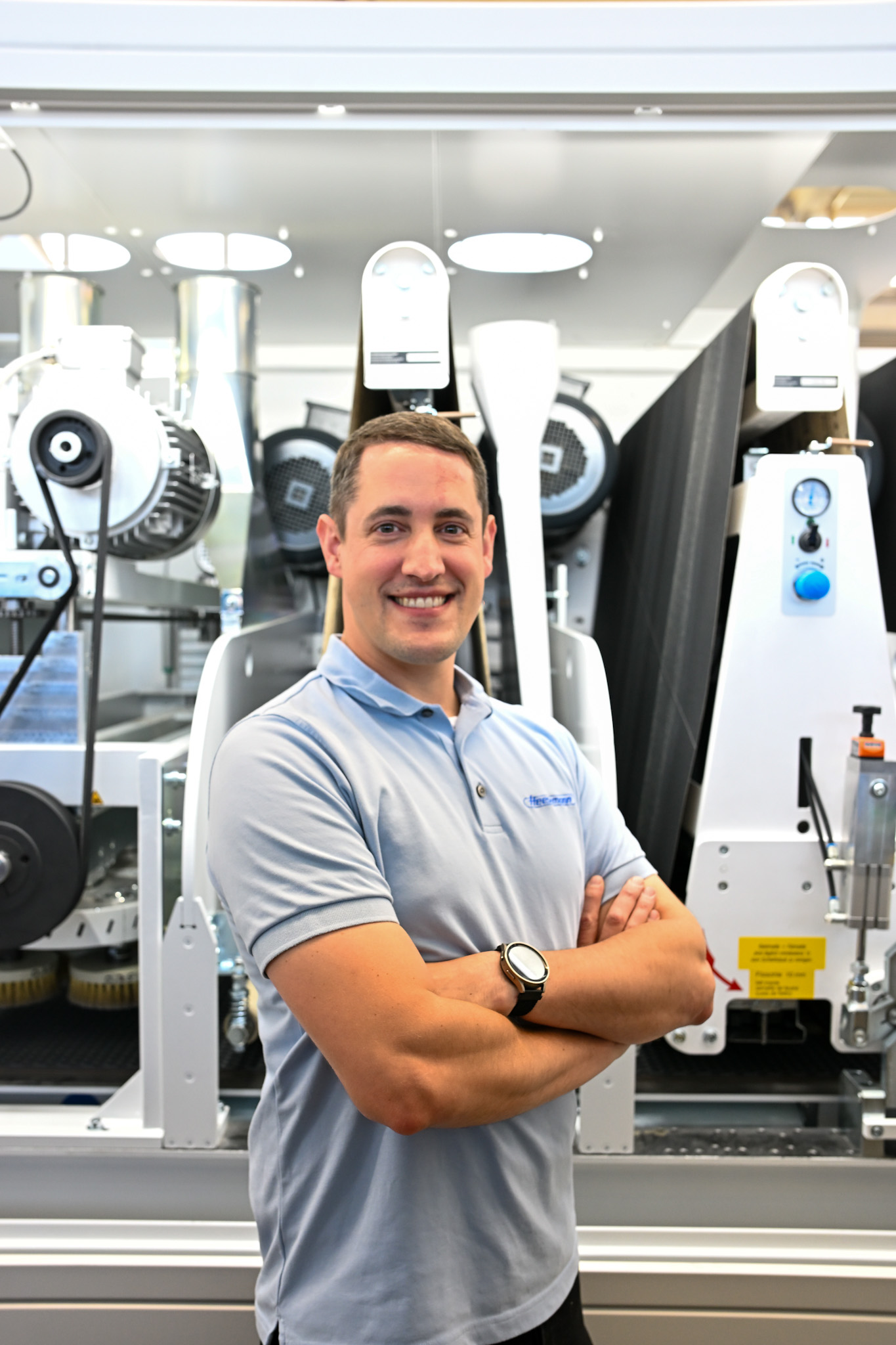
Your point of contact
Pascal Diller
Head of Mechanical Engineering
To the expert profile

Innovation at Heesemann means systems thinking

At Heesemann, innovation is not created in isolation.
It is an integral part of the machine architecture.

Under the direction of Pascal Diller, machine concepts are being developed that combine mechanics, sensors and automation to form an intelligent overall system.

The goal is not maximum complexity.
The aim is maximum process reliability.

Initial situation in modern manufacturing environments

Today, modern grinding processes must:
handle high cycle rates
deliver reproducible surface quality
Minimize set-up times
Reduce downtimes
Documenting process data
Minimize operator influence
These requirements call for intelligent, adaptive systems.

The Heesemann Approach: Three Principles of Systemic Innovation

Our automation strategy is based on three core principles:

modularity
Adaptive control systems
Intelligent sensors
Know-how ensures quality.

Modular machine concepts

New machine platforms enable flexible adaptation to a wide range of production requirements.
Technological features:
Extensible aggregate structure
Flexible configuration of grinding stations
Scalable control architecture
Integration into existing production lines
Retrofitability of selected functions
This is how solutions are created:
from the single machine
up to a fully automated production unit
Scalable control architecture

Modularity creates investment security — today and in the future.

Dashboard mockup
Know-how ensures quality.

Automation & sensors — precision through data

Reproducible quality is not created by chance.
It is created through intelligent process monitoring.

Heesemann integrates modern sensors directly into the machine architecture.
Technological components:
Intelligent workpiece recognition
Automatic material thickness measurement
Sensor-based aggregate control
Permanent process monitoring
Adaptive parameter adjustment
The result:
constant surface quality
reduced scrap rate
minimized operator influence

Real-time optimization through digital control

Digital control systems continuously analyze process parameters and adjust them automatically.

Features:
Automatic pressure adjustment
Dynamic belt speed
Energy-efficient control systems
Process data analysis
Minimize material consumption
Downtimes are reduced.
Plant availability is increasing.
Efficiency is improving sustainably.

Real-time optimization through digital control

Digital control systems continuously analyze process parameters and adjust them automatically.

Features:
Automatic pressure adjustment
Dynamic belt speed
Energy-efficient control systems
Process data analysis
Minimize material consumption
Downtimes are reduced.
Plant availability is increasing.
Efficiency is improving sustainably.

Measurable added value for customers

Innovation is only relevant if it creates economic benefits.

Specific benefits:
Higher plant availability
Consistent surface quality
Lower material consumption
Reduced personnel costs
Faster payback
Predictable production safety
Automation is not an end in itself.
It is an economic factor.

Future security through updatable systems

Industry 4.0 is not a buzzword.
It is a living reality.

Heesemann develops machines that:
Stay updateable
are digitally networkable
Can be analyzed remotely
are expandable on the software side
Remain optimizable in the long term
This creates systems that not only work efficiently today — but also remain technologically relevant in the future.
Dashboard mockup

The role of Pascal Diller

As Head of Engineering, Pascal Diller is responsible for the technical and disciplinary management of the engineering team.

His focus is on:
Modular system architecture
Structured development processes
Innovation projects in the area of automation
Market launch of new machine concepts
Implementation of international industry standards

Technological development at Heesemann is not accidental — but strategically planned.

Automation FAQs

Can existing Heesemann machines be automated?
In many cases, yes — through targeted upgrades or control expansions.
How does automation affect operators?
Manual intervention is reduced and process stability increases.
Is the technology future-proof in the long term?
Yes The modular architecture enables extensions, updates and integration of new technologies.
Avatar photo

Analyze potentials now

Would you like to find out how automation can make your grinding processes more efficient and safer?
Our engineering team is happy to analyse your individual production situation.