Technology & engineering

Scalable machine architectures in grinding machine construction

Production programs are changing.
Batch sizes vary.
Materials and surface requirements continue to evolve.

However, investments in industrial grinding machines are designed to last 20 to 30 years. Anyone who invests in a plant today must already consider future requirements.

In the long term, rigid machine concepts lead to technological limitations, expensive replacement investments or inefficient special solutions.

Scalable machine architectures create structural flexibility here — technically sound, systemically thought out and economically resilient.
Your point of contact
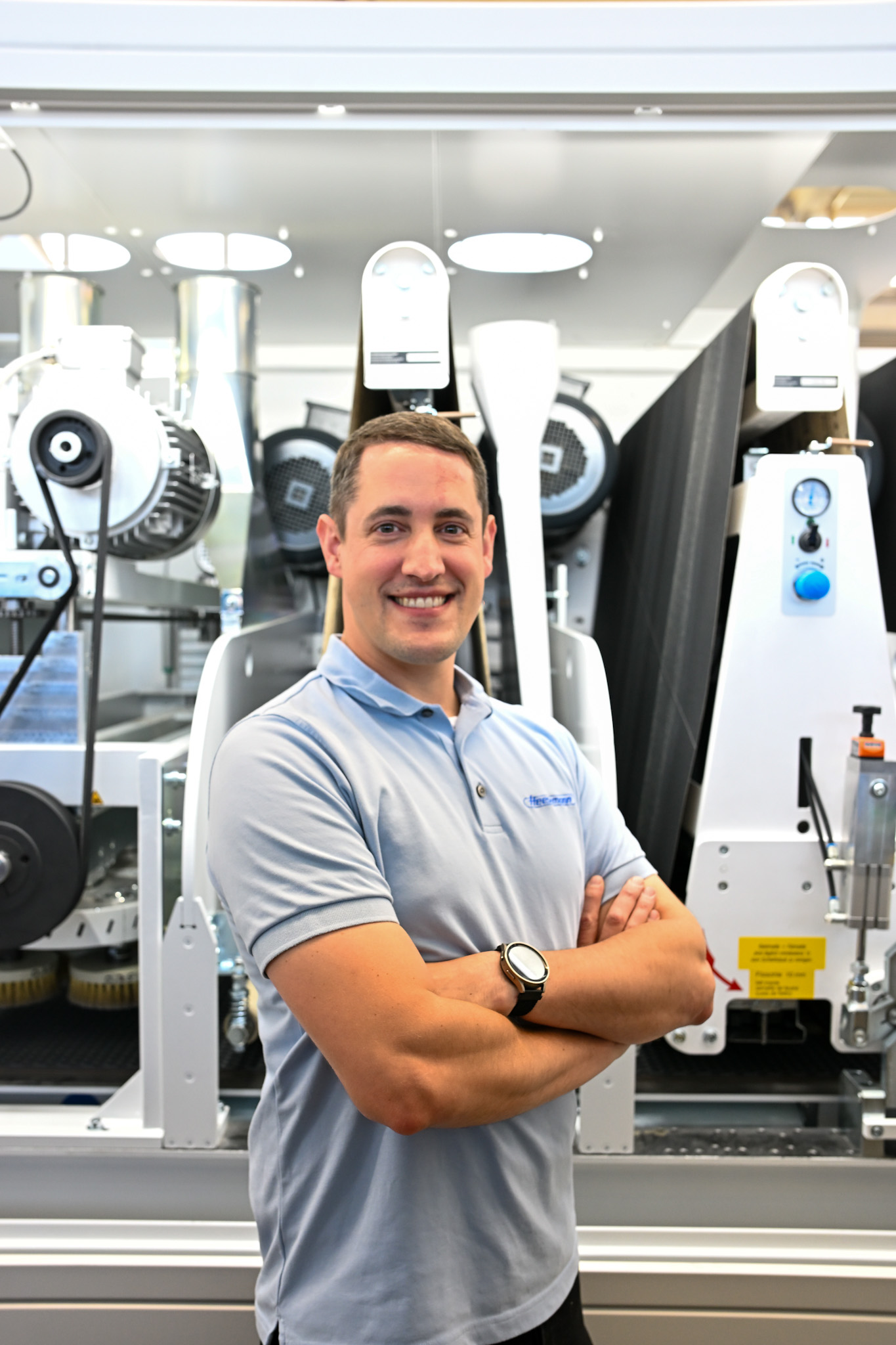
Pascal Diller
Head of Mechanical Engineering
To the expert profile

Innovation at Heesemann means systems thinking

At Heesemann, innovation is not created in isolation.
It is an integral part of the machine architecture.

Under the direction of Pascal Diller, machine concepts are being developed that combine mechanics, sensors and automation to form an intelligent overall system.

The goal is not maximum complexity.
The aim is maximum process reliability.

What does scalable machine architecture mean in industrial grinding machinery?

Scalability describes the ability of a machine platform to be functionally extended, technologically updated and systemically adapted — without a complete new development.
Our development approach:
standardized base units
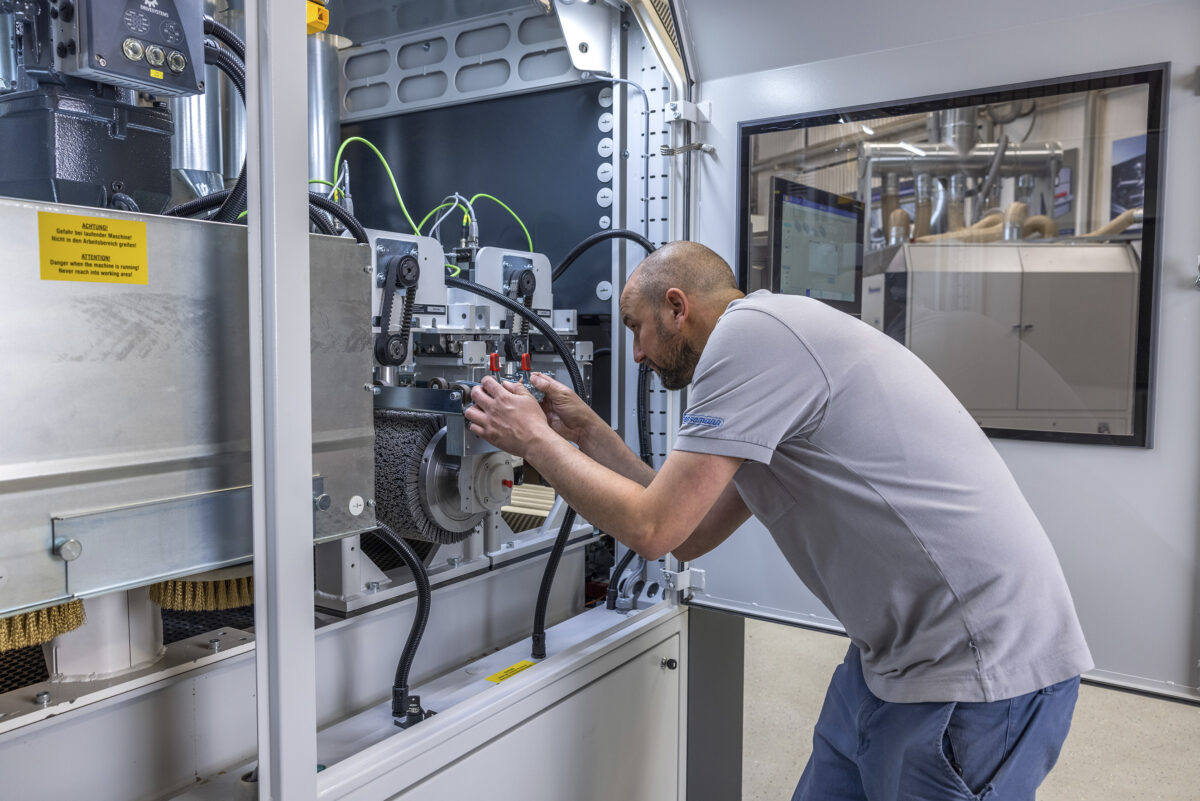
modularly combinable sanding units
clearly defined mechanical and control interfaces
expandable automation components
updatable control architecture
Integration into existing production lines
Scalability is therefore not an additional feature, but a basic design decision in engineering.

Platform strategy at Heesemann

Heesemann does not develop machines as individual designs, but as structured platforms.

This platform strategy is based on:

torsionally resistant machine frame
precisely defined aggregate interfaces
modular electrical and control architecture Sensors
systematic update capability
clear separation of basic system and application-specific characteristics
This results in customer-specific solutions on a technically stable basis.
Know-how ensures quality.

Torsionally resistant base systems as a foundation

Each platform is based on a structurally designed, highly stable base frame.
Technical relevance:
Minimize vibrations
reproducible grinding results
high dimensional stability
Integration into existing production lines
long-term geometry stability
Mechanical integrity is a prerequisite for:
high gloss finish
Intermediate lacquer sanding
textured and metal sanding
Tolerance-critical applications

Scalability cannot be achieved without a stable basic architecture.

Dashboard mockup
Know-how ensures quality.

Flexible aggregate configuration

On the basis of the platform, different processing units can be combined:
Calibration units
Fine sanding aggregates
Texture brushes
metal processing units
Special and special units
Depending on the application, the CSD® magnetic pressure bar system can be integrated and enables:
uniform pressure distribution
constant surface quality
reproducible results with changing material thicknesses
The platform remains the same — the configuration adapts to the application.

Real-time optimization through digital control

Digital control systems continuously analyze process parameters and adjust them automatically.

Features:
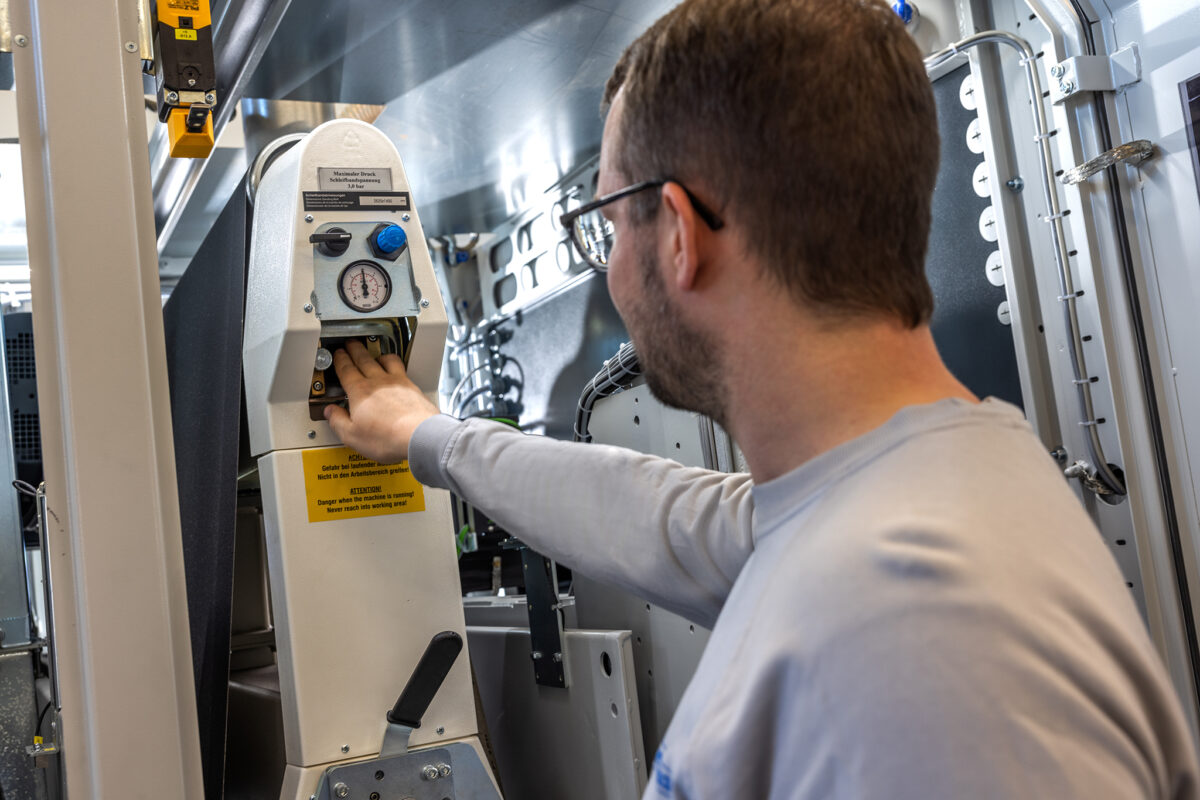
Automatic pressure adjustment
Dynamic belt speed
Energy-efficient control systems
Process data analysis
Minimize material consumption
Downtimes are reduced.
Plant availability is increasing.
Efficiency is improving sustainably.

Modular control and digital expandability

Scalability doesn't end with mechanics.

Modern grinding machines must:
be able to be integrated into existing line controls
Communicate with conveyor technology
Connect robotic systems
Capture production data
Enable remote diagnostics
Modular control architectures enable:
new software modules added
Automation components expanded
digital interfaces retrofitted
Integrated condition monitoring systems
without replacing the entire system.


Integration into production lines

Scalable architecture means system capability.

Heesemann machines can:
operated as a single system
integrated into existing lines
designed as part of complex production systems
Reduced personnel costs
be connected to higher-level ERP or MES systems.
Defined mechanical and control interfaces enable predictable integration.

From a single machine to a modular production line

The platform architecture allows solutions for:
Individual machines
customer-specific special systems
multi-stage grinding processes
automated production lines
future expansion levels
Scalability means that every machine is designed systemically — not designed in isolation.

Economic benefits of scalable architecture

A scalable machine platform offers:
reduced development times
faster project implementation
predictable investment stages
lower replacement investments
long-term expandability
technological update capability
high production reliability
Companies do not invest in a static solution, but in a resilient architecture.
Dashboard mockup

The role of Pascal Diller

Pascal Diller, Head of Engineering and member of the management board, is responsible for the structural development of scalable machine architectures.

His focus is on:
clearly defined architecture concepts
standardized interfaces
modular construction
long-term platform strategy
digital transformation capacity

In this way, Heesemann combines traditional mechanical engineering expertise with structured innovation development.
Engineering is becoming the strategic basis for future product generations.

Automation FAQs

Can an existing Heesemann machine be expanded?
In many cases, yes. The functionality can be extended through additional aggregates, control updates or automation components. The underlying platform structure is a prerequisite.
How long do machine platforms remain updateable?
The architecture is designed for long-term expandability. Mechanical stability and modular control enable updates over many years.
Does scalability make economic sense?
Yes It reduces long-term replacement investments, increases flexibility when changing products and enables gradual expansions instead of complete new purchases.
What is the role of the control architecture?
Modular control enables integration into lines, digital expansion, remote diagnostics and future software adjustments.
How does scalability affect surface quality?
Thanks to a stable basic architecture and precise aggregate interfaces, the processing quality remains reproducible even with expansions.
Avatar photo

Architecture is decisive for future viability

Scalability is not a technical detail.
It is a structural decision in engineering. Heesemann develops machine platforms that are powerful today and can be expanded tomorrow.