Technology & engineering

Process optimization & digitization in special machine construction for sustainable production safety

Industry 4.0 doesn't start with software.
It starts with a deep understanding of processes.

Modern grinding processes are technically demanding. Different materials, variable batch sizes, high surface requirements and tight tolerances meet increasing time and cost pressure.

For Heesemann, digitization in special machine construction therefore means more than just networking.
It means measurable process improvement through structured use of data.

Under the technical direction of Pascal Diller, digital transformation is systematically integrated into machine architecture, control and service.
Your point of contact
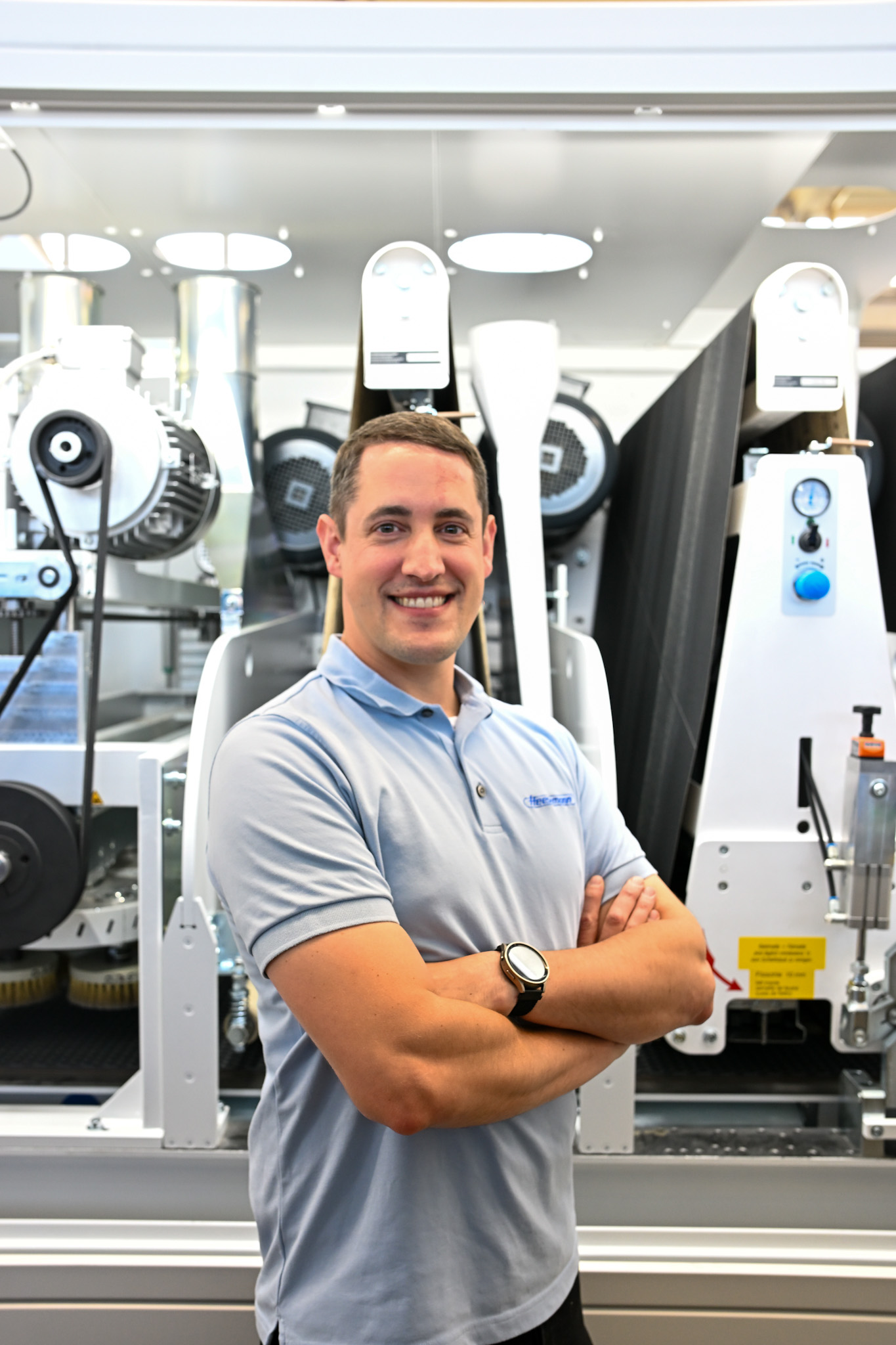
Pascal Diller
Head of Mechanical Engineering
To the expert profile

Systemic innovation in mechanical engineering

Innovation at Heesemann is not an end in itself.
It follows a clear engineering logic.

New technologies are only integrated if they make processes more stable, transparent or efficient. Mechanics, control and data structure are not considered separately, but developed as a functional unit.

Technical progress is achieved through system understanding —
not through a variety of functions.

Why digitization is crucial in special machine construction

Industrial grinding processes are highly complex system processes:
different material properties
changing workpiece geometries
variable layer structures in the paint area
increasing quality requirements
short response times in production
Without data-based transparency, optimization potential remains hidden.

Process deviations often only become visible when scrap occurs or downtime occurs.
Digital systems make it possible to identify deviations at an early stage and analyse them in a structured manner.

Data-based process analysis as a basis for optimization

Transparency is the first step in any sustainable increase in efficiency. Heesemann does not develop machines as individual designs, but as structured platforms.

Heesemann machines systematically record relevant production data:

Machine states
process parameters (e.g. feed rate, pressure, belt speed)
Band running times
Tool and abrasive wear
error messages
Key performance indicators
Temperature and vibration values
This data forms the basis for:
high gloss finish
Intermediate lacquer sanding
textured and metal sanding
Tolerance-critical applications
Process improvement is therefore based on facts — not on assumptions.
Know-how ensures quality.

Smart control systems for adaptive processes

Digital control is more than a user-friendly interface.
Modern Heesemann controls enable:
adaptive program control
automatic parameter adjustment
Process monitoring in real time
intelligent workpiece recognition
Storage and reproducibility of complex programs
Interfaces to ERP, MES or line control systems
The control architecture is modular and can be updated.
This allows new functions to be integrated without replacing the entire machine.

The result is a dynamic production environment that can react to material changes, quality requirements or process fluctuations.
Know-how ensures quality.

Integration of digital systems into machine architecture

Digitalization is not a retrospective add-on at Heesemann.

Sensors, control, data structures and remote functionality are constructively integrated into the machine platform.

Key technical elements:
standardized data architecture
scalable software modules
defined interfaces
Integration of intelligent sensors
Remote diagnostic capability
This structure allows:
systematic data evaluation
safe line integration
long-term update capability
expandable automation
Mechanical precision and digital intelligence are intertwined.

Remote diagnostics & digital services

Digital processes don't end at the machine.

Heesemann offers online service solutions that enable:
Remote diagnosis
System analyses
software updates
Feature enhancements
parameterization support
Condition assessment of components
Sources of errors can be identified before they lead to shutdowns.
Service assignments can be prepared in a targeted manner.
Downtime is reduced

Production safety is achieved through predictive analysis.

Continuous improvement through structured use of data

Digitalization is not a one-off project.
It is a continuous optimization process.

Heesemann integrates structured improvement processes:
Analysis of historical production data
Comparison of target and actual values
Adjustment of grinding programs
Optimization of pressure and feed parameters
Reducing belt wear
Training of operating personnel based on real data
The aim is a permanently stable process management with reproducible results.

Economic benefits for manufacturing companies

Through data-based process optimization, companies benefit from:
reduced scrap rate
more stable grinding processes
higher repeatability
reduced downtime
predictable maintenance
improved plant availability
more efficient use of tools
transparent cost structure
Digitalization thus becomes a measurable competitive advantage — not an isolated IT project.

The role of Pascal Diller

Pascal Diller, Head of Engineering and member of the Executive Board, promotes the integration of digital technologies in a structured way.

His approach:
Combining classic mechanical engineering with modern control technology
Development of scalable software architectures
Standardization of data structures
Integration of intelligent sensors
consistent platform strategy

Digitalization is thought of as part of machine architecture — not as a separate level.
The result is a future-proof grinding technology with long-term expandability.

FAQs about process optimization & digitization in special machine construction

What specific data do Heesemann machines collect?
Among other things, machine states, process parameters, belt running times, tool wear, error messages and performance indicators are recorded. This data forms the basis for systematic analysis and optimization.
Is digitization also possible with existing systems?
In many cases, yes. Existing systems can be digitally expanded through software updates, sensor enhancements or interface integration.
How does remote diagnosis contribute to production safety?
Remote diagnosis enables early analysis of faults and status deviations. Service deployments can be prepared in a targeted manner, which reduces downtime.
What is the role of the control architecture?
A modular, updatable control system allows adaptive process management, data collection and integration into line or company systems.
Is digitization economically measurable?
Yes Key figures such as scrap rate, cycle time, tool life and plant availability make optimization effects quantitatively assessable.
Avatar photo

Future-proof sanding technology through data-based processes

Digitalization in special machine construction creates transparency, stability and measurable efficiency in complex grinding processes.
Heesemann combines mechanical precision with structured use of data to create production systems that are secure over the long term.
We would be happy to analyse your processes together and identify concrete optimization potential.